By Mary Le
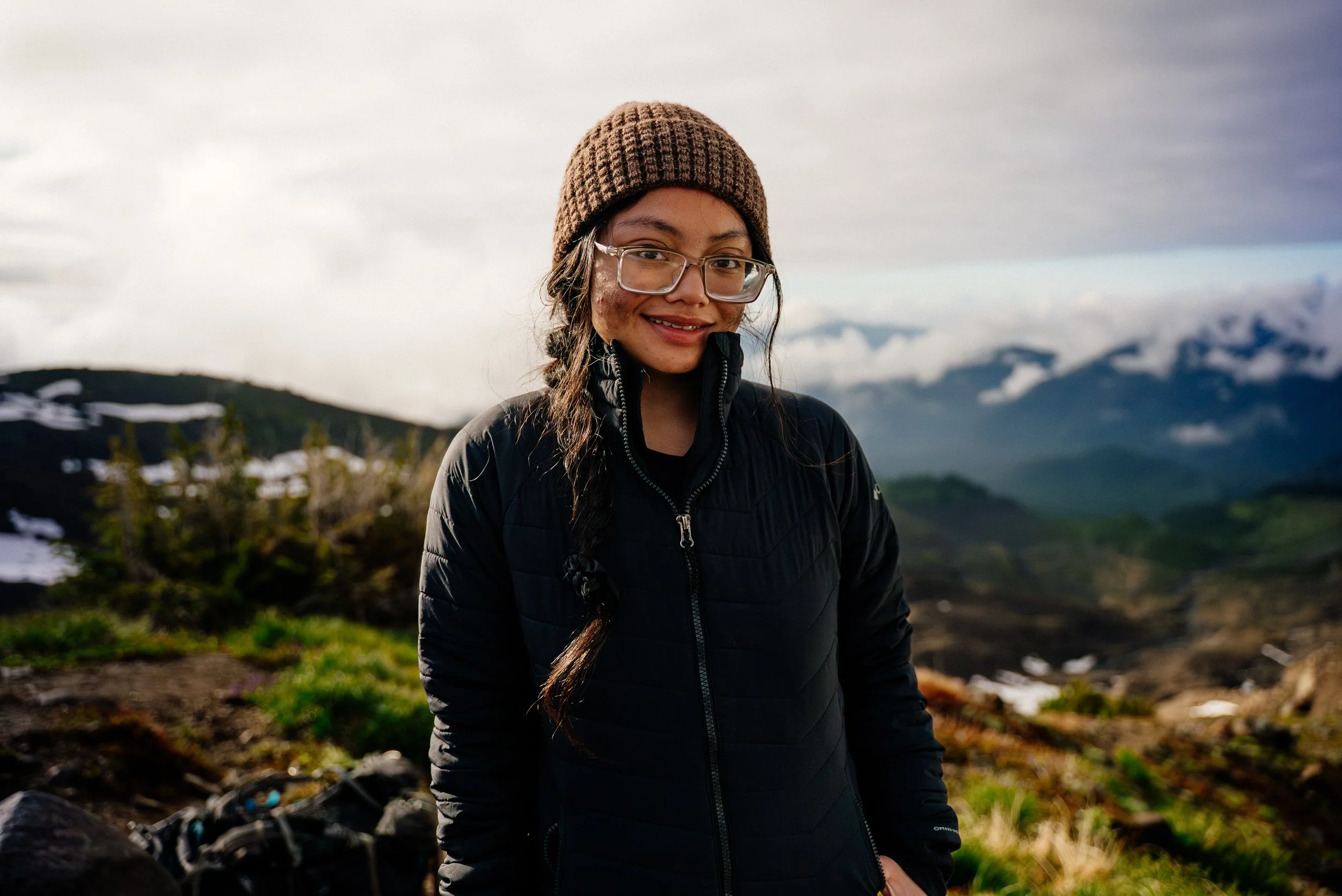
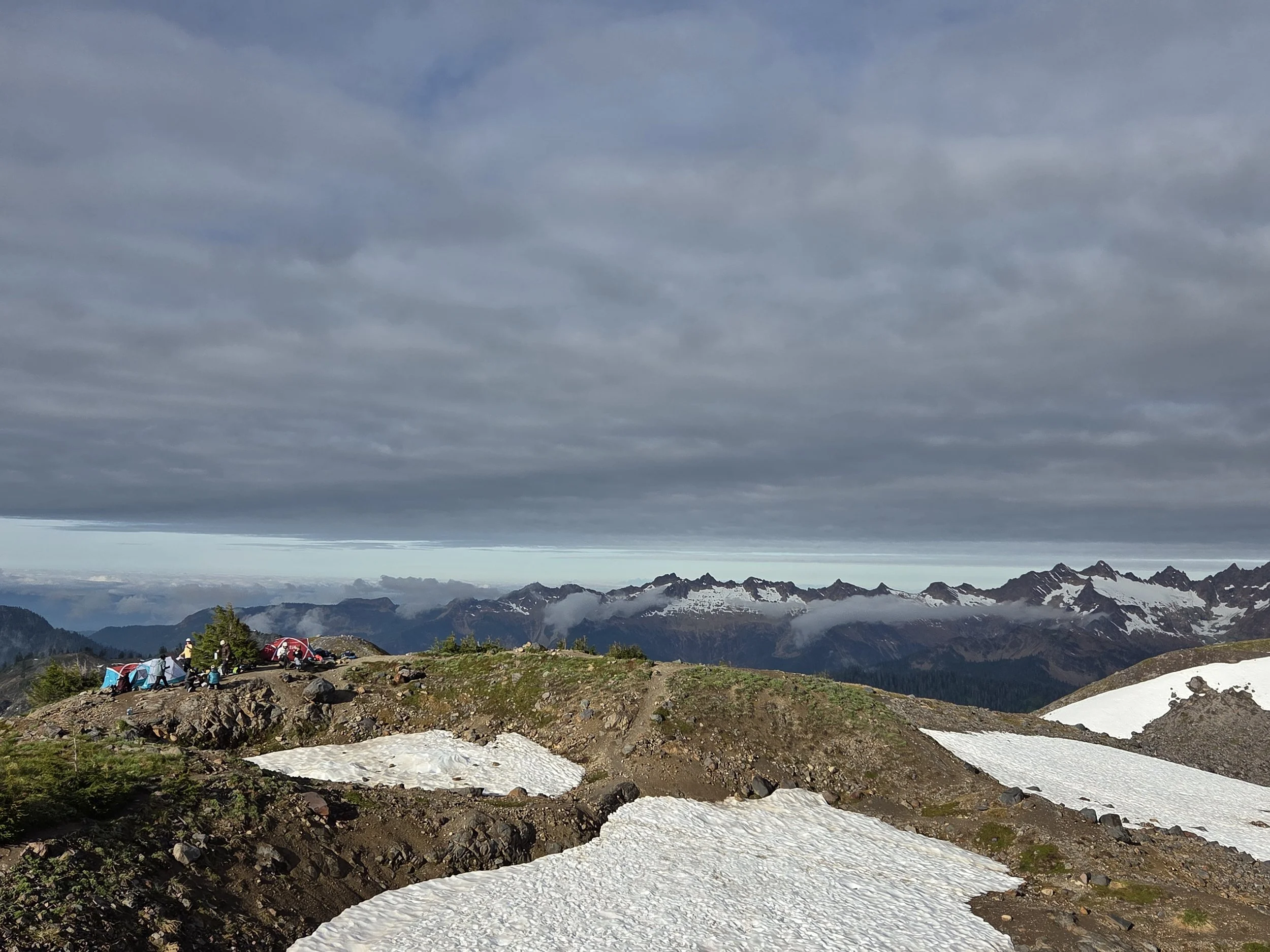
Standing on the rocky ridge near basecamp, I see her in the distance, peeking through the fog.
Koma Kulshan spans what seems like miles and miles of snow and ice, although the fog only lets me take her in a little at a time. I hear my breathing and heartbeat, a faint stream of water, and the wind. Our crampons and ropes are still at camp; from the ridge, I am simply taking in the scale of where we are about to climb.
I grew up in Portland, Oregon, with a view of the mountains even from the city. I hiked around our peaks with my family when I was younger, but had limited access to more challenging adventures as I got older. I was super intimidated by mountaineering and had no idea how to get into it. How do you go from looking at a mountain to finding the skills, equipment, community, and confidence to climb one?
I didn’t know. I was just always itching for it.
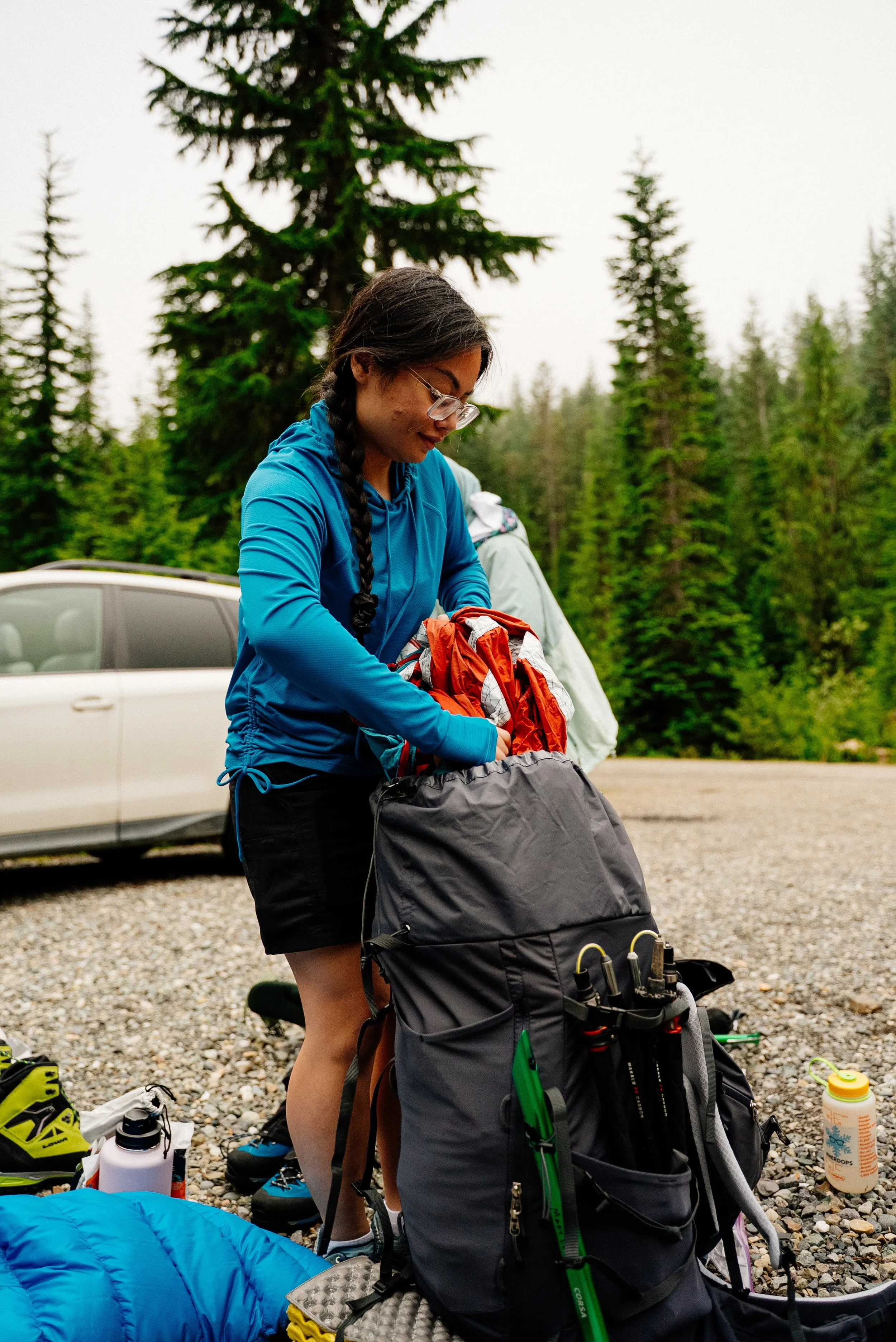
The Summit Scholarship finally gave me a way in. Still, wanting it badly didn’t make the beginning easy.
I forgot my prescription glacier sunglasses at home, and I have low vision and an eye condition, so the mistake made me even more nervous about being in the backcountry. Then, on our hike to basecamp, it started downpouring. My glasses kept fogging until I could barely see through them as we traversed a narrow ridge covered by fog.
I was so in my head. What on earth did I get myself into?
I am proud that I worked through the fear and leaned on my teammates. Our guides had already discussed possible accommodations with me, so I knew we had options. Once we reached camp and rested, I bounced back and now I look back on that memory and smile.
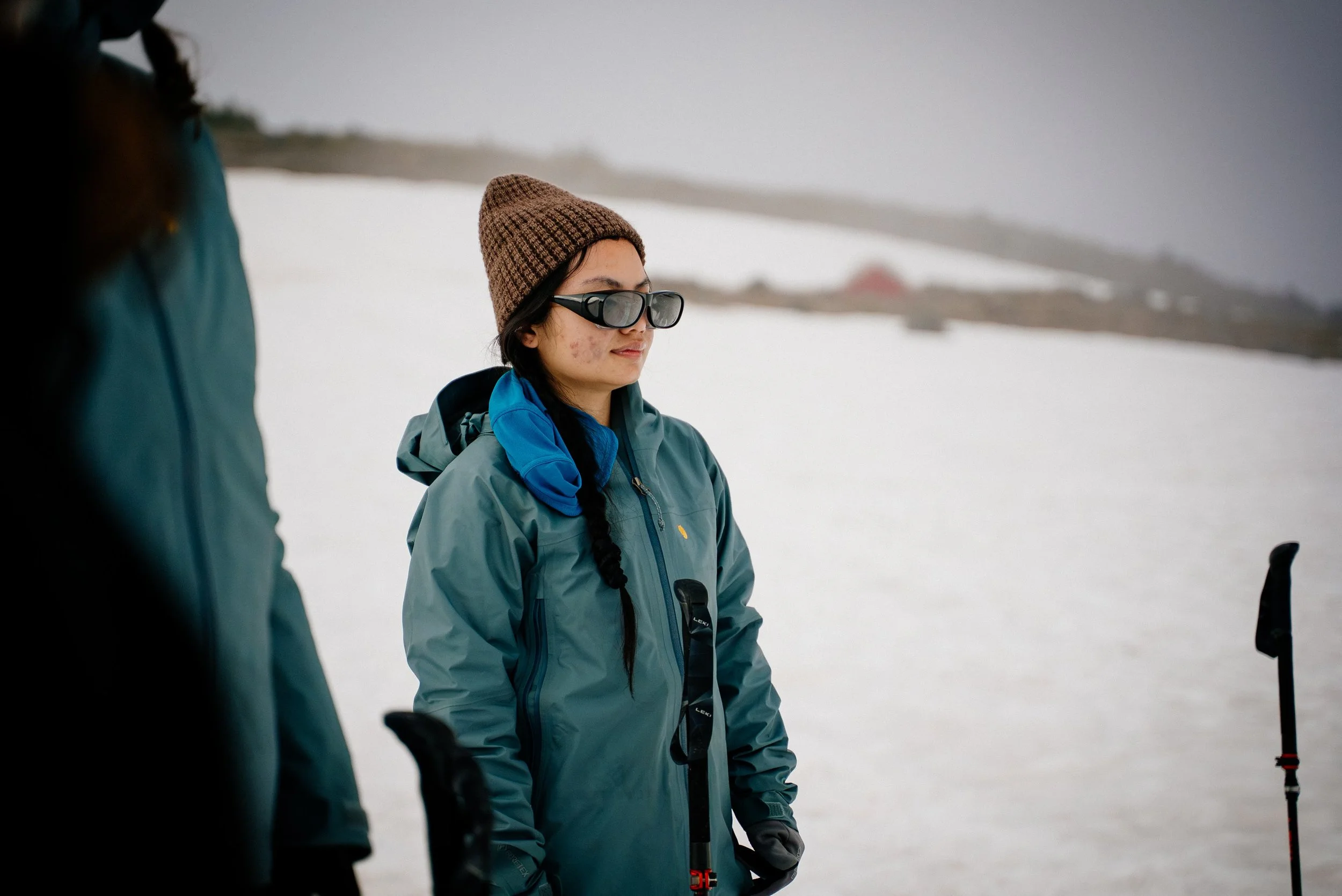
At camp, we learned technical climbing skills and mountain knowledge from women who had spent years guiding, researching climate change, and forecasting avalanches. It was especially impactful to watch our three guides coordinate and make decisions in real time.
When it was finally time to climb, we put on our crampons, tied into our rope teams, and stepped onto the Easton Glacier. Seeing an icefall up close was incredible. So was crossing a crevasse—even if it was a small one! It felt amazing to put the skills we had practiced into action and move together as a rope team.
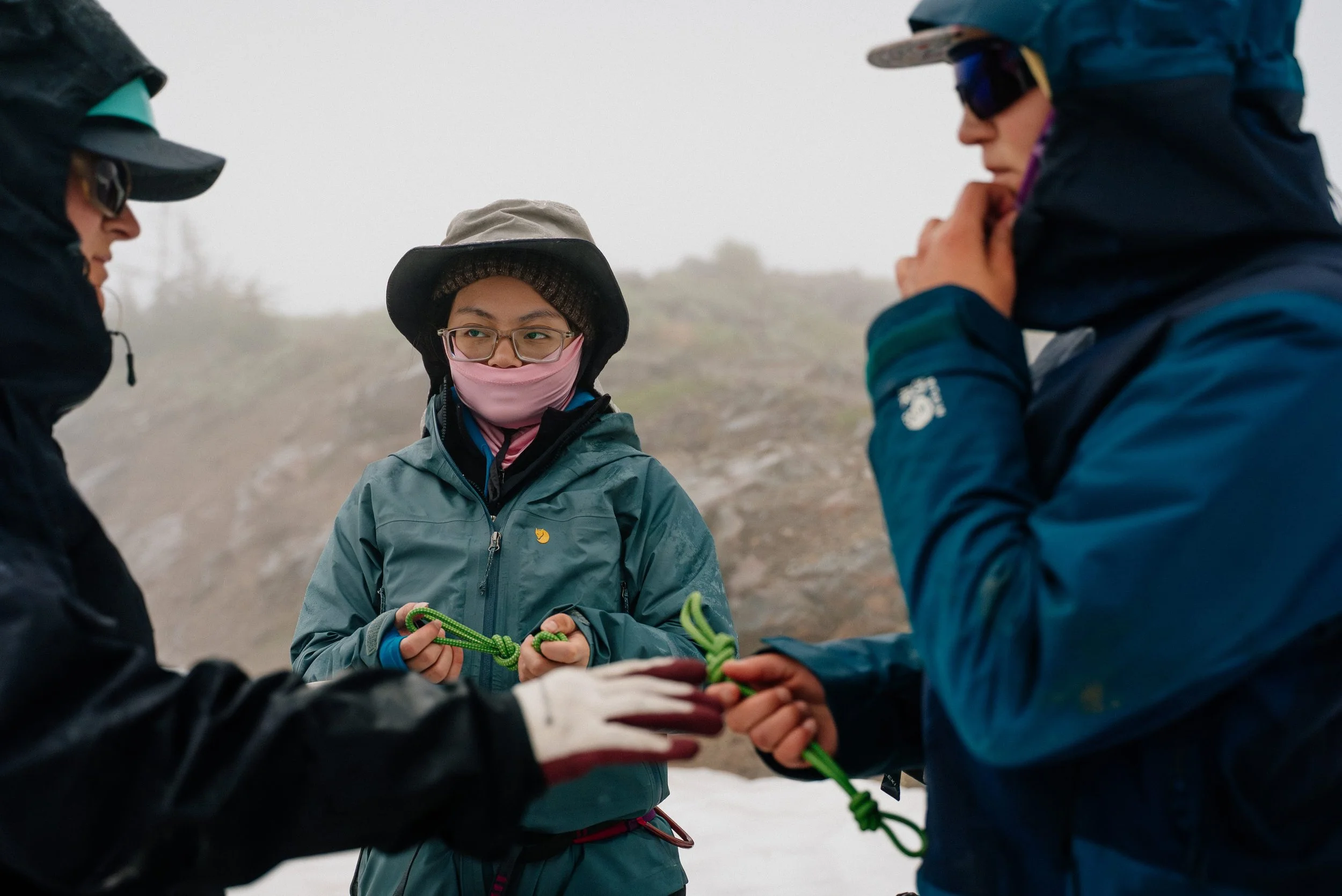
As we climbed, my world became very small even though the glacier around me was enormous. My mind wasn’t racing with worries about school, family, work, or what people might think of me. I spend so much of my life trying to figure out the exact path I am supposed to follow, but on the glacier, I couldn’t see the entire route ahead—and I didn’t need to. I could see what was directly around me. I could hear my breathing and heartbeat, the wind, our crampons, and our ice axes breaking through the snow. I wasn’t afraid because I had the skills we had practiced, the judgment of our guides, and the women on my rope team. For the first time in a very long time, I felt fully present and calm. I could take one step at a time. That was enough.
On the descent, I actually teared up a bit seeing our tents at basecamp because I was so proud of what we accomplished together.. It was humbling and completely surreal to move across the Easton Glacier with an ice axe in my hand, connected to the incredible women beside me.
After hours on the glacier, we returned cold and tired, and discovered a marmot attack. My reaction was basically, Oh no!! followed by some choice words for the marmots, even though it wasn’t my tent. But my new friends were laughing, and soon we were recording a sensationalized marmot-attack interview for Natalia’s camera while our guides handled the damage. Something super annoying became a camp lesson and a silly bonding memory.
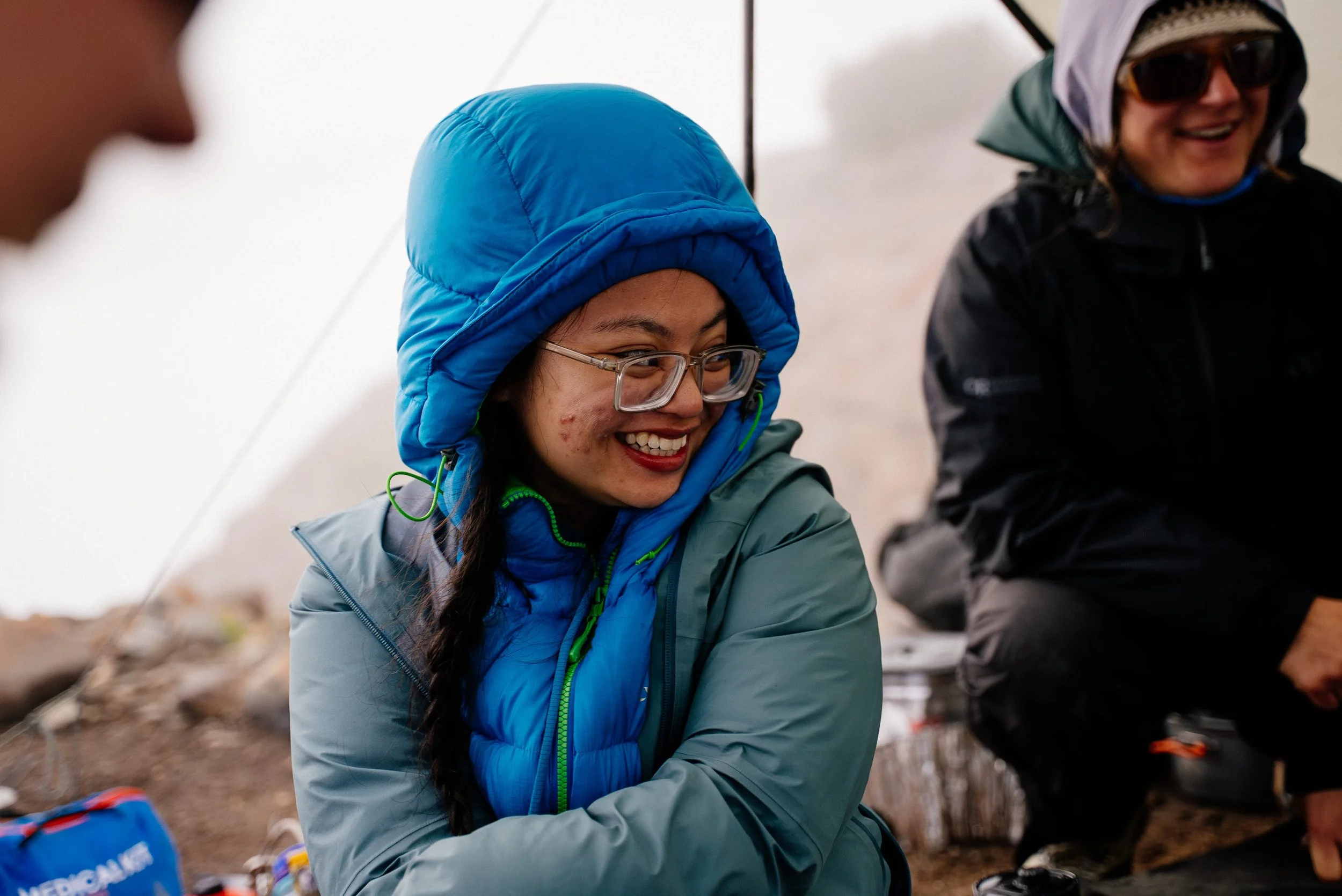
That night, between jokes and laughs, my tentmate and I had a deeper conversation about the day. We talked about how much we belonged there, then realized we hadn’t even needed to ask ourselves whether we belonged.
We simply did.
That feeling landed differently for me because the expedition also came after losing my grandma unexpectedly at the start of the year. I had been thinking about how fleeting life is and the sacrifices made by generations of women in my Vietnamese immigrant family, many of whom never had access to opportunities like this. Feeling so comfortable and supported among women on the mountain made me want to use the freedom I have to pursue experiences that nourish me, even when they seem daunting.
The biggest lesson I brought home is to “tie into adventure” – to choose experiences that challenge and nourish me instead of forcing my life along one perfectly optimal path. I want to carry home the way the women on this trip led, adapted, laughed, and took care of one another. I got this slogan from the nalgene bottle I picked up at the gear shop, and now it serves as a daily reminder of a beautiful experience.
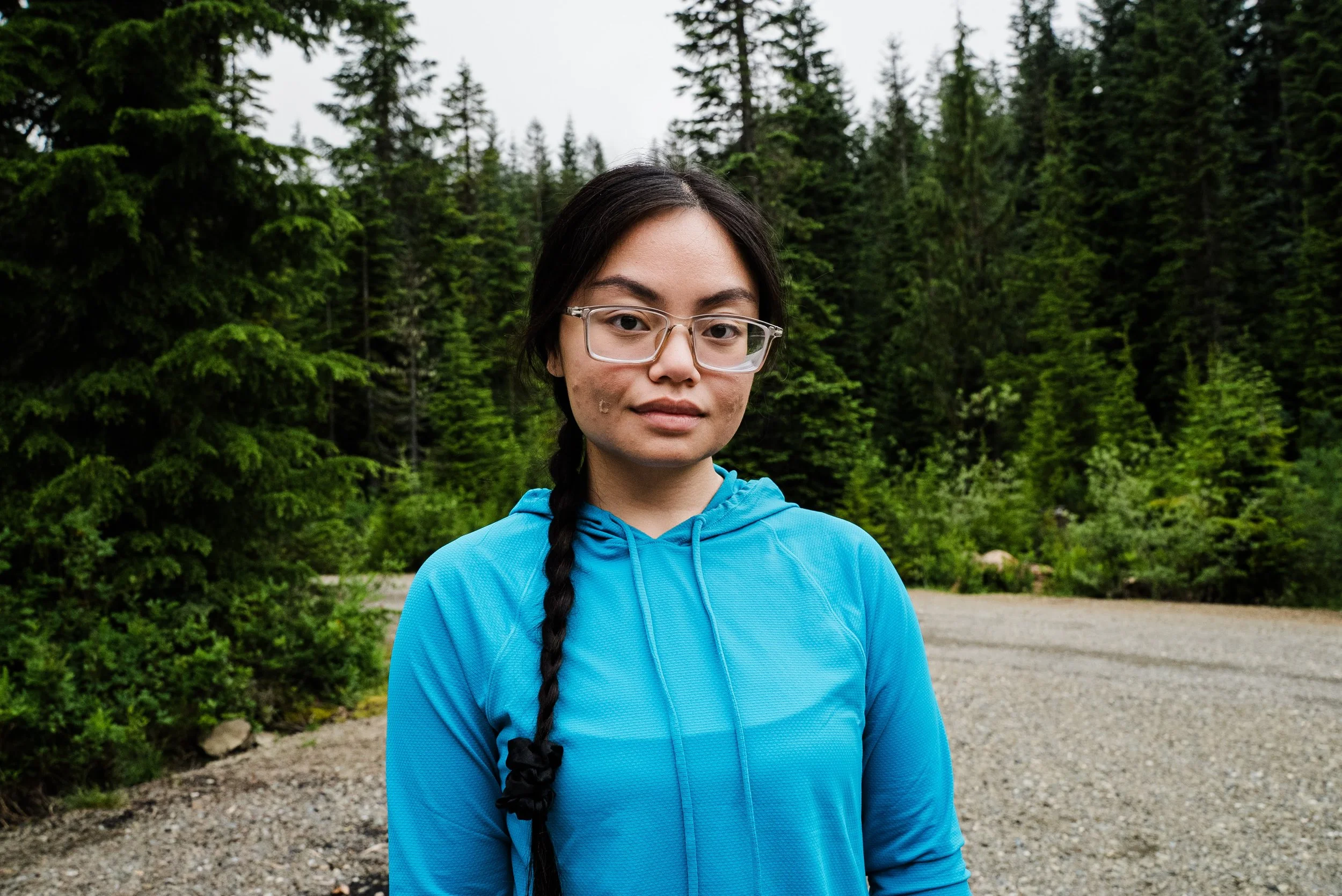
The Summit Scholarship gave me more than one climb or one exciting story to tell. It gave me the skills, support, and confidence to see a place for myself in a world I had spent years wanting to enter.
If you are a future applicant looking toward the mountains and thinking, I want that, but I have no idea how to begin, I know exactly how that feels. You don’t have to arrive feeling fearless, perfectly prepared, or already certain that you belong.
The mountains are still visible from Portland, and sometimes their peaks appear through my airplane window. The difference is that now, when I look at them, I no longer see a world I can only admire from a distance.
Now, I can really tie in.