
The Adventure Lens Grant was created from the simple understanding that we need more women behind the camera telling stories about women’s experiences in the outdoors. Natalia Chanes, a filmmaker from Mexico, was our 2026 recipient, and joined the Rope Team Rising recipients on their Mount Baker youth mountaineering course produced by our operating partner AWExpeditions. Who gets to tell a story shapes how that story is seen, and when women are given the opportunity to document their own communities, we see more nuanced, honest, and expansive representations of what adventure can look like. Natalia gave us insight into her experience leading up to the trip, what filming looked like, and some memorable moments from Mount Baker.
Written by Natalia Chanes
It took me two days to finally answer the phone and find out I'd won the Adventure Lens Grant. I thought it was a scam — I'm from Mexico, and here I was getting a call from the United States. I had no idea that call was about to change the course of my life in the mountains.
Back in January 2026, I applied for the Adventure Lens Grant, a scholarship that gives women interested in outdoor photography and filmmaking a shot at a real expedition. This year, the winner would document an expedition on Mount Baker, in Washington State. When I got the call that I'd been selected, I was just starting to feel like myself again. I'd been going through a rough patch — my vitamin D and ferritin levels had bottomed out, throwing off my thyroid hormone, all from overtraining and not eating enough. After a few weeks in November 2025 of feeling dizzy, nauseous, exhausted, and unable to concentrate, doctors finally figured out what was wrong. Three iron infusions later, I was filling out a form that meant, if I got selected, climbing a mountain with 20 kilograms (about 44 pounds) on my back in just a few months. So when the call actually came, the nerves hit fast. What if it happens again right before the trip? What if I start feeling sick out there?
Little by little, I eased back into training, and within a month I was back. I studied film, but after a few rough experiences on past jobs, I got scared to even hold a camera, so I focused on what I love most: editing. That's how the last six years went — sitting at my computer, editing, watching hours and hours of footage from different projects. Last year, I started missing the feeling of capturing the world through a camera, with my own vision behind it, so little by little I started letting go of the fear. It felt like starting over — learning the technology of the new cameras, how to shoot with intention, how to move on a mountain with a camera on me. But I realized that six years of sitting and watching footage from so many different cinematographers had taught me more than I thought, and it made me feel a lot more confident in my own shooting skills.
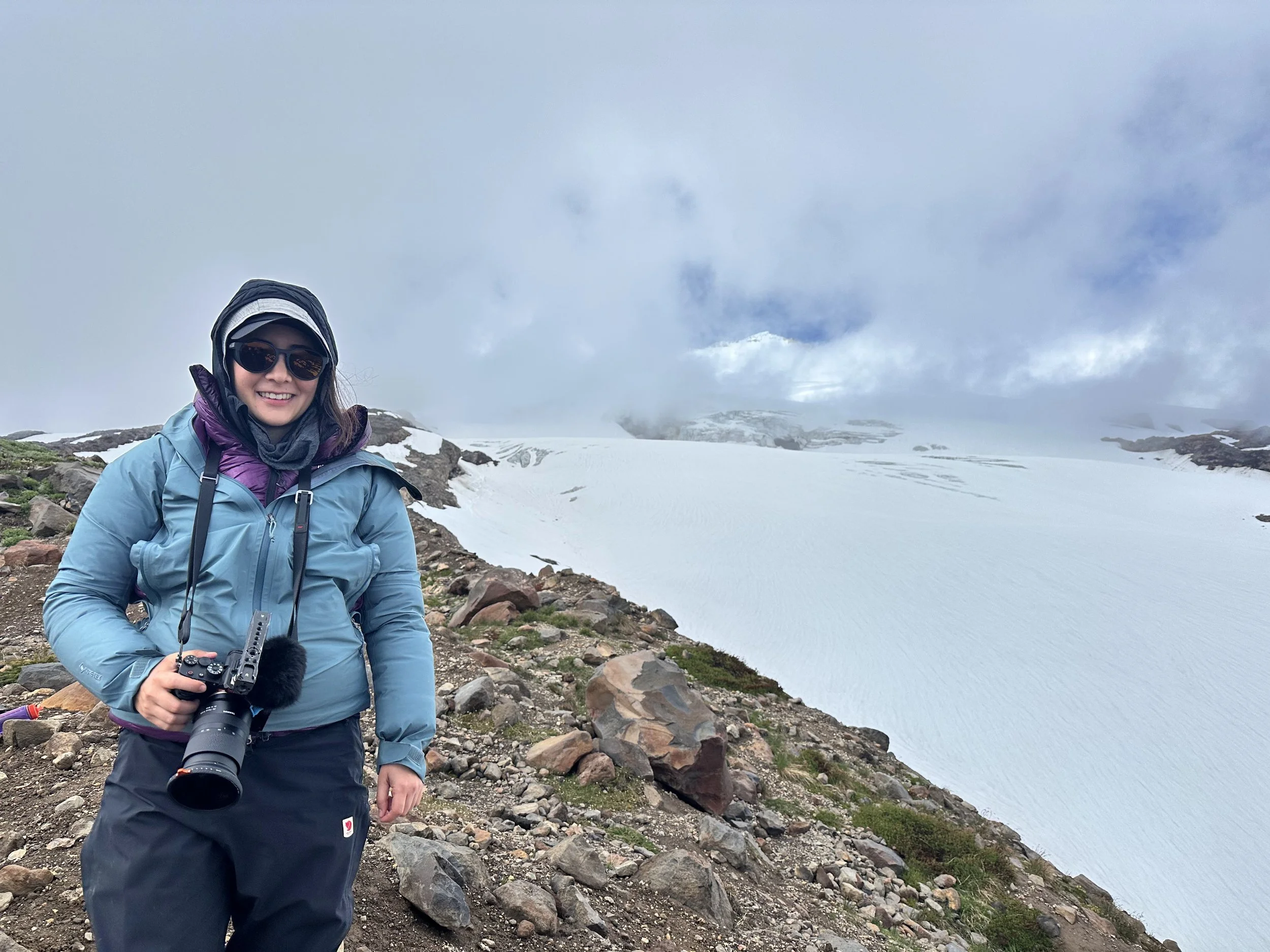
Over the following months, I trained with my pack loaded exactly the way I'd carry it on Mount Baker, and learned how to move with a camera strapped to me. I wanted my attention, once I got there, to be on the story — not on the gear. What drew me to this adventure most was the chance to go on an all-women expedition. My field tends to be male-dominated. In fact, the first time I spoke with my mentor, Savannah Cummins, she told me there aren't many women editors in the adventure world. I've been on mountain work trips where it was just me and a group of men, and that's not always the most comfortable place for a woman to be. I've been underestimated on set more times than I can count. Once, someone questioned whether I could even ride the subway on my own, as if being a woman meant I couldn't find my way around. Another time, a production chose to bring on a male camera operator with zero experience instead of me — they ended up firing him. So beyond getting to know Mount Baker, I wanted to know what it felt like to belong to an all-women group.
The night before flying out to Seattle, I couldn't sleep from the excitement and the nerves. A thousand thoughts were running through my head. Will I make it to the summit? Will I get good footage for my documentary? What if I feel sick? What if my flight doesn't make it? I was scared of showing up as the only Mexican in the group. That fear disappeared the moment I got to the hotel and met the rest of the team. Right away I knew everything was going to be fine, and that I was in good hands. While I filmed the gear check, our guides — Kat, Mary, Dani, and Carly — walked everyone through tips, and just listening to them made me feel calmer and calmer about being there.
The experience was extraordinary. We had four intense days of mountaineering school, packed with activities designed to help us connect and get to know each other. We spent a lot of time inside our tents, which made room for some pretty deep conversations with our tent-mates. We also had plenty of conversations about the famous WAG bag, which turned going to the bathroom on the mountain into a completely new experience for all of us. I could honestly do a commercial for that company.
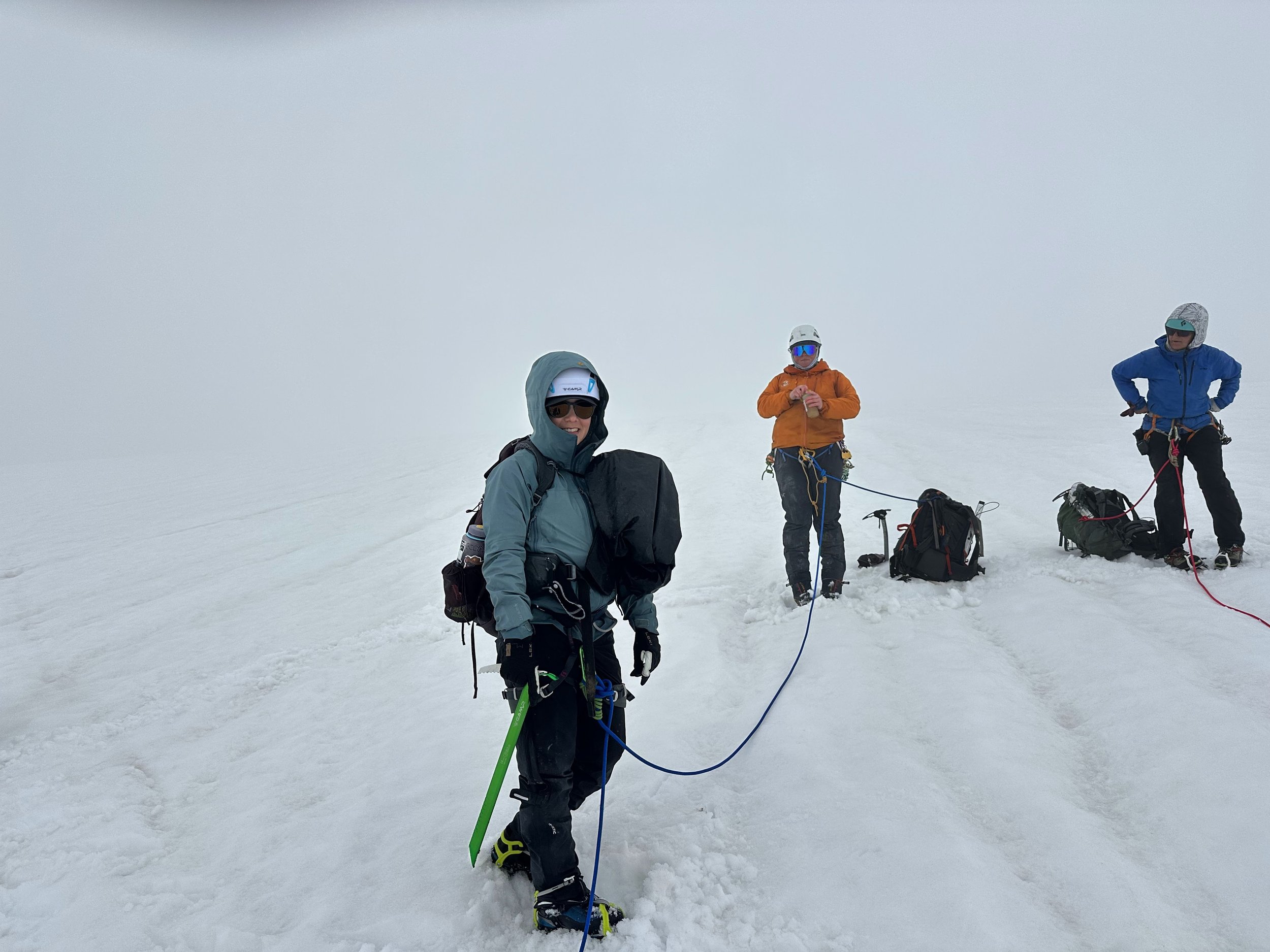
Our guides warned us about the marmots from day one — they told us they're adorable little creatures, but a real threat when it comes to food and WAG bags. They told us to put all the tent's food inside a sleeping bag and stash it in the middle of the tent. But on day two, we fell victim to an attack. While we were in glacier class, we watched, fascinated, as a marmot hung around nearby — with no idea it was betraying us. It left behind a giant hole, paw prints everywhere, and holes chewed straight into our food. We pulled all the food out and stashed it under a pile of rocks. The next day, a neighbor from another tent told us a marmot spent almost ten minutes trying to knock the rocks down and never managed it. Even after clearing all the food out of the tents, we got hit again the following day — this time two tents were attacked. Nothing was stolen, but they left a serious mess of mud behind. Ever since, I don't trust any marmot that looks a little too friendly. I've attached an illustration of the marmot that attacked us, in case anyone runs into it on Mount Baker.
The biggest challenge was the weather. It never stopped raining, and we were cold and soaked the entire time, which ended up keeping us from summiting. But even so, our spirits never broke. Every one of us kept the best attitude about it — we accepted our fate and decided to have fun instead. That turned out to be the most essential ‘gear’ we brought up that mountain. We all caught each other's enthusiasm and good vibes, because we felt comfortable and accepted, so not summiting became the least of our worries. The biggest one was the snacks the marmot stole.
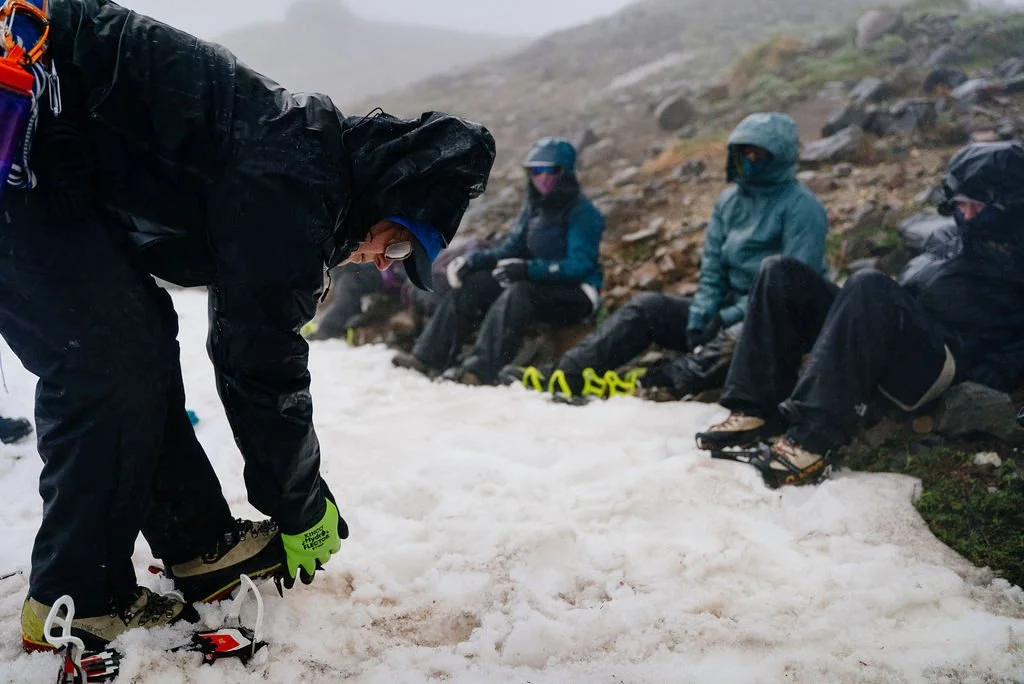
The sun finally came out on the last day — after three days of rain, we were more than ready for it — and that's when I understood why everyone insists so much on good Gore-Tex gear. After hours in the rain, my Fjällräven jacket and pants were still completely dry. My LOWA boots and Leki gloves kept my feet and hands warm through all those long hours. My Title Nine sunhoodie kept me warm and protected from the sun, and my Nite Ize headlamp held up through all the moisture too. When we finally got to walk on snow and use our full mountaineering gear — crampons, harness, helmet, and ice axe — I felt really confident using my CAMP gear, especially since the rain had turned the snow into something like an ICEE. We had another class where they showed us how to put on all of this gear. I loved my CAMP gear: the helmet is the most comfortable one I've ever worn, and the color of my harness was my favorite. And my Deuter backpack. I'm pretty small, and I worried it might hurt me, but it fit perfectly, especially around the hips — I came out completely fine. I actually forgot I was carrying 44 pounds on my back.
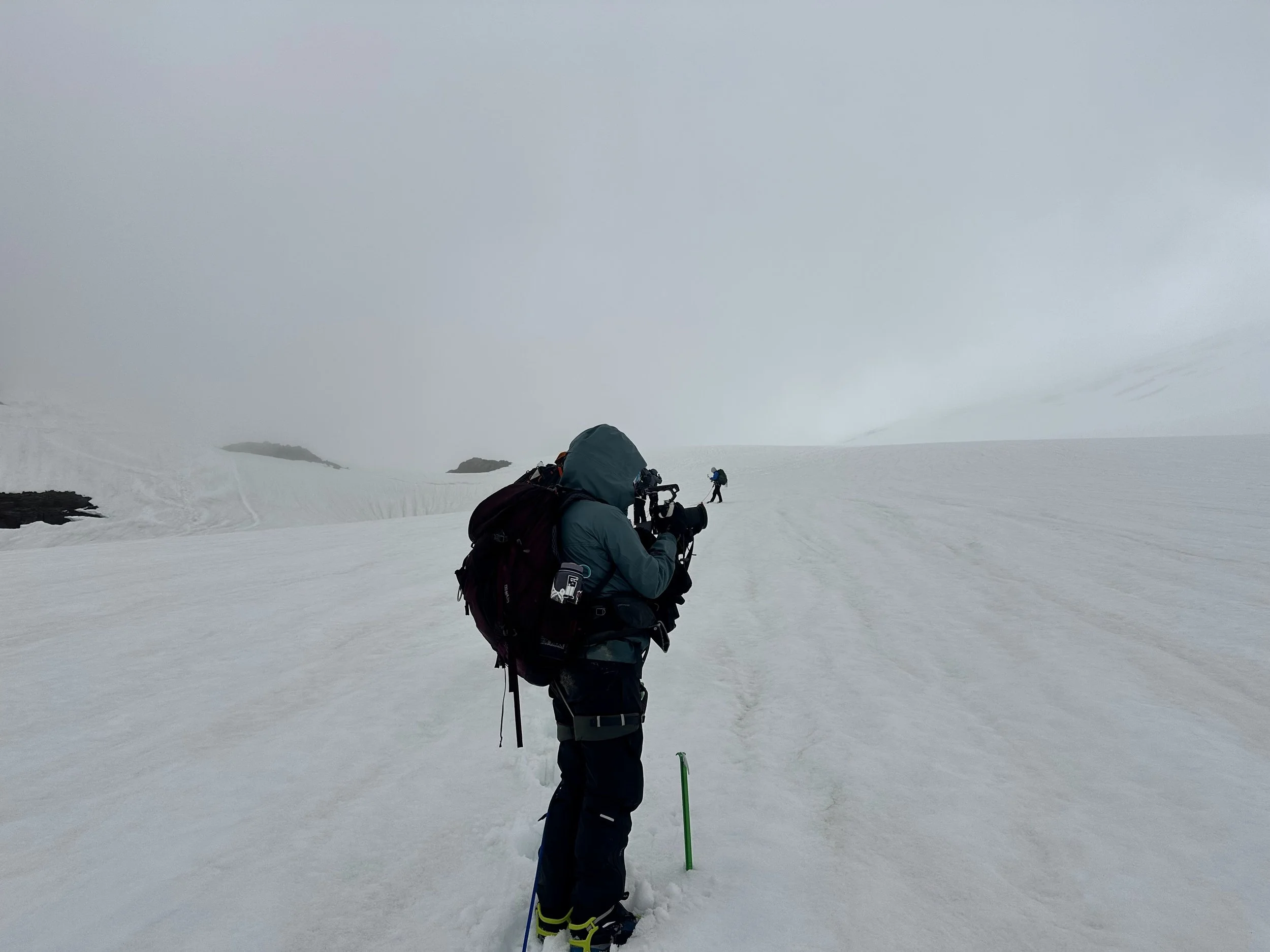
Through all that rain, I kept trying not to lose sight of why I was there. I wasn't there to film a summit — I was there to film people. I wanted to speak to the human experience, to what brings us to spend time on a mountain in the first place. That first day, the weather worried me a lot, but that challenge pushed me to grow so much more as a camera operator, and it gave me moments I never would have captured if the sun had been out.
There's no better place to learn than surrounded by women willing to listen, help each other, and teach — a place where I never once felt judged for who I am, and where I always felt like I belonged. This is, without a doubt, an experience I'll never forget, alongside women I admire and will always carry with me. From Sunny to Savannah, and every single woman who was part of this: Dani, Kat, Mary, Carly, Mariam, Mary Le, Abi, Jaz, Abigale, and Kintla.