
Beyond Climbing: Reflections from the Cordillera Blanca
By Maria Bobrowski-Artola, Cordillera Blanca Scholarship Class of 2026
When I got the news…
When I got the email from The Summit Scholarship Foundation that I was a recipient for this year’s Cordillera Blanca expedition, and that I had just over two months to train for it, my brain was doing cartwheels.
Part of me hesitated. I’d never traveled on glaciers like these, let alone at this altitude, but an even bigger part of me was ready to respond with the quickest “yes, sign me up!” my fingers could type. I freaked out for a bit then took the day to mentally orient myself to what I was certain I’d lean into. After my phone conversation with Sunny, I understood what the compressed timeline meant…it was going to be a challenge. “Okay, I’m all in,” I said.
So, I did what I could to start training that next day, and those two months were no joke. I was training 4-5 days a week and preparing for a big move ahead of my Master’s Program this fall. I accomplished a lot. I’d been accepted into my dream field placement: a survivor-led program offering crisis counseling for folks experiencing intentional violence, and I was becoming noticeably stronger! I went from a winded 30 minute stairmaster session to maxing out the machine with a weighted pack. (I didn’t know the stairmaster even had a limit, fyi it’s 60 minutes!) At the beginning of June, I took my training outside as I summited my first 14,000ft peak in Colorado.
I was motivated. After all, this was the opportunity of a lifetime. I’ve felt a longing for the conocimiento of Latino America ever since I was little. Su calidez, su cultura, su historia, su naturaleza, su magia. You could say one of the reasons I applied was for younger me, longing for my ‘other home’, while I was growing up in my ‘other home’ in the Midwest.
I also applied for the opportunity to challenge myself on my own terms and mountaineer the way I wanted to. Engaging with the mountains and the land as a conversation, from a place of reverence in the shared security and support of other women and gender expansive climbers. I set out committed to this way of relating while grappling with the rhetoric of conquest and imperial histories that exist within the sport.
It was really special to experience these climbs in a group centering women and led mostly by women. I say mostly because, as I learned, women mountaineers in Peru face significant barriers, especially when entering the profession.
As our guide, Yudi, explained, the Cholitas Escaladoras of Bolivia have served as trailblazers for women in mountaineering, opening pathways for Indigenous women in the Andes since 2015. But in Huaraz, women were not allowed to enroll in official mountain guide certification programs until 2000, and it was not until 2017 that the first woman was able to enroll in the program. To date, there has not been a single graduate-- not for a lack of desire or interest, of course, but because time constraints, machista attitudes, and the broader politics surrounding women in climbing continue to make this path challenging.
Arriving in Huaraz…
Thursday July 8th - Saturday the 11th
The mountains have always offered me a sense of comfort and belonging. Whenever I’m in their company I get a lovely nostalgia for the cerros of Guanajuato, where I was born. After arriving in Huaraz, I got that sweet sense of familiarity-- especially from the earth-toned Cordillera Negra.
Legends have it that the Cordillera Negra and Cordillera Blanca are two sisters-- or lovers who long eternally for each other but have always been separated by the Callejon de Huaylas. Ugh. Anyways, Huaraz is named after the Quechua word “Waraq” which means “sunrise”. It’s said that sunrise and sunset are the closest the two cordilleras get to embracing. I think the only thing more romantic than watching the sun set and rise over these two everyday was watching a couple of pigeons cuddle each other on the ledge of the balcony I’d pass daily to get to my hostel. There was a lot of affection embedded in the landscape, in Huaraz.
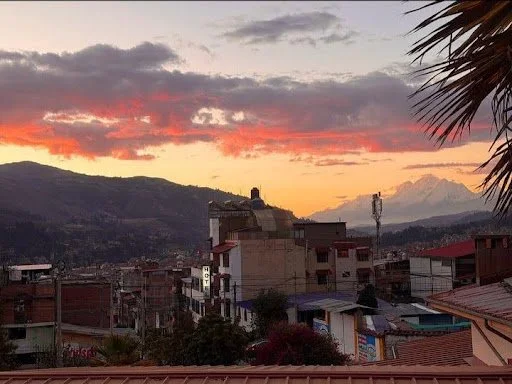
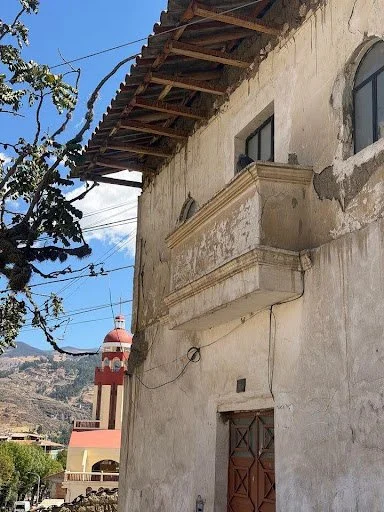
Views of the Sunset in Huaraz, July 2026(L), Two pigeons sitting on a ledge in Huaraz, July 2026(R)
The days passed until finally, the time came to meet the full team on Sunday, July 12th. A group of 10 women, from across the globe and across decades, each bringing our own mountains to summit. Whether that’s processing the death of a loved one, moving through grief or trauma, marking a life transition, or simply proving to ourselves that we belong. Being in a group like this provides not only the container to climb these tall peaks (Ishinca and Tocllaraju) in a supportive environment, but also the space to explore and reflect why we’re there. Many of us discovered that we are more capable than we give ourselves credit for. After a few acclimatizing hikes in the area, skills clinics, team briefings, gear checks, and shared meals, the first summit we would attempt together was Nevado Ishinca (5,530m/18,143ft).
The story off the grid…
Thursday July 12th - Thursday July 23rd
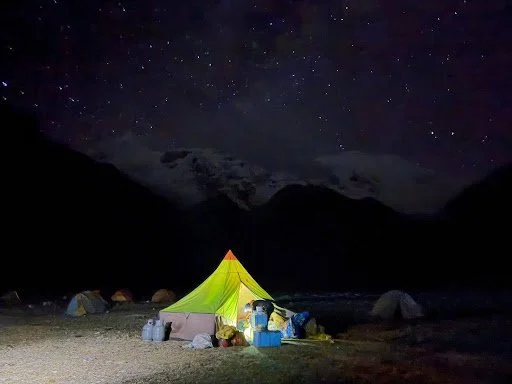
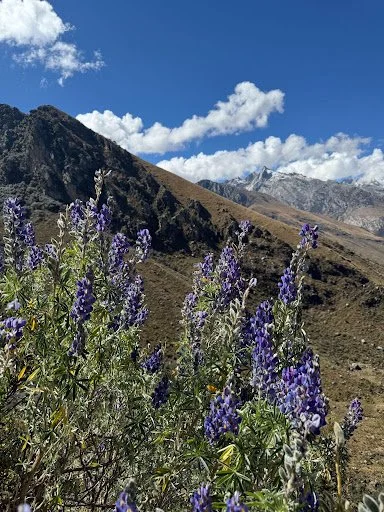
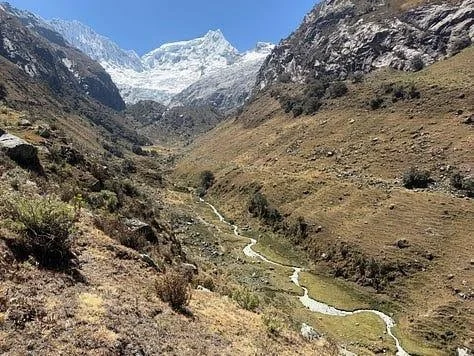
When our team set off to Ishinca Valley we were greeted by fields of wildflowers, horses, cows, foxes, chinchillas, condors, and granted entry by keepers of the land (the local farmers granting us access via their local roads into the sacred valley). Once we arrived we were enveloped by the towering Tocllaraju and the conversation began.. we’d hear her rumble in the night as she shook off loose rock and snow.
We took a day to refine our skills, how to traverse over glaciers, rappel, and knots practice. That night I saw the milky way for the first time. I genuinely have no words to express how starstruck I was. It was an out of body experience.
Views from Basecamp in Ishinca Valley, July 2026
The next day we moved up to Ishinca’s highcamp at 5000m, where the soft, warm beige giant revealed herself. Ishinca was a truly beautiful mountain, blushing as the sun set around us. We went to bed early, creating an explosion of gear prep in our two person tent. That night was calm, quiet. We woke up at 2am, but I wasn’t a person really until about 2:30.
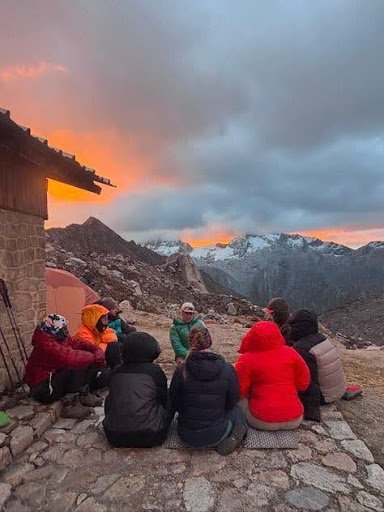
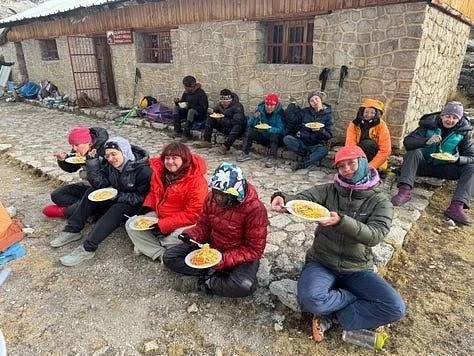
Ishinca Highcamp, July 2016
After a magical summit of Ishinca, we discovered a lot about each other. The team dynamic unfolded and there was so much shared learning and care. V, offered tricks for dealing with blisters, and my tentmate, Aurore, offered endless wisdom from her climbs past AND very important drugs that…literally…saved my butt. So many tidbits of knowledge I eagerly noted for future adventures. This journey was special and unique to us. Afterall, our group’s bodies respond differently to the altitude, the cold, and we often had to come up with creative ways to make gear that isn’t always made for us, work for us. That afternoon, we enjoyed some warm soup, and prepared for our next, more technical summit of Tocllaraju.
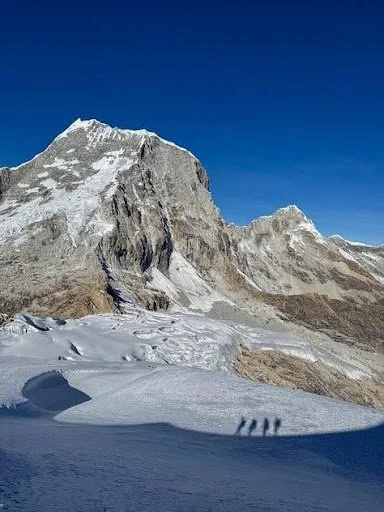
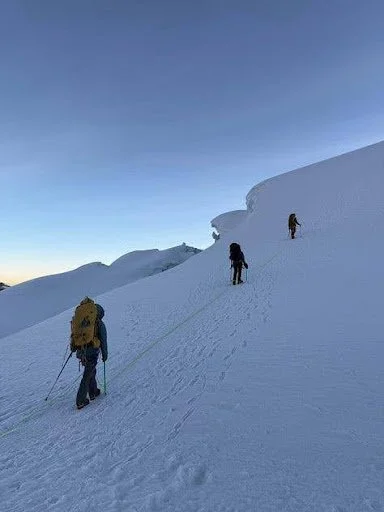
Ishinca Summit Day Climb, July 2026
By the time we came back to basecamp though, the terms of the conversation became clear. Tocllaraju’s conditions were too dangerous to climb and she would not let us pass. We were forced to leave the valley, pivoting to a new peak, Vallunaraju. In these matters, the mountains always decide and I’m grateful to have been on a team that prioritized safety over summit.
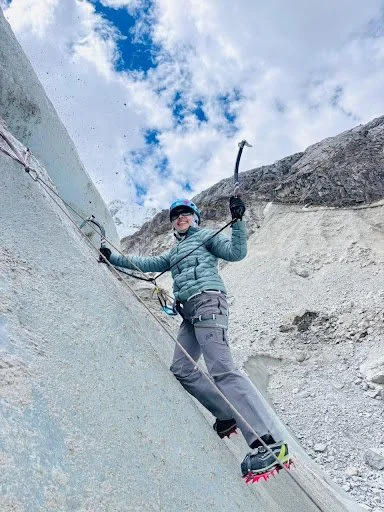
We returned to Llaca Valley, where we learned to iceclimb at the beginning of the trip. Here, we set up our basecamp and prepared for our big day. With more than double the approach and elevation gain than Ishinca, I can’t lie, I was nervous. I said a prayer before I rested for a few hours.
Our alarms went off and at 1am we got started, relying on the tunnel vision our headlamps could provide and following our teammates’ footsteps. Sometimes, to the left of me there’d be a rockface and to the right a complete abyss… Note to self - what’s in the abyss at 3am is none of your business. Here, you trust that your hands and feet will make friends with the rock and grant you passage to the next section of the moraine.
…Somewhere before arriving at the glacier we paused for a quick respite and turned our headlamps off to look at the stars. City lights also twinkled far off in the distance, Huaraz, small enough to fit in my hand…
When we arrived at the glacier it was still dark. We geared up and began our ascent to the summit. This part was the most challenging for me. First, getting my left crampon on, then the several hours that followed. As one of a two-woman rope team, I was grateful for the trust and for the flexibility that our system offered. Together, we set off onto the glacier, occasionally, stepping over crevasses that disappeared deep into the ice. Occasionally also talking myself out of moments where a sneaky thought would wedge in some self doubt or fear.
When I couldn’t catch up to my own breath, the mountain would nudge me to slow down-- an honest and humbling dialogue. As we approached the final summit push, my rope leader, Emma, called out to me with words of preparation, “dig deep Maria!” We were at the crux. A seemingly endless sideways staircase on the summit ridge.
All I could do was think “left, right, left, right..” letting the gentle cadence of my pace, breath, and snow below ground me. Here, I found a rhythm and a relief in knowing that I had an incredible team to support me. As things got hard, I felt the most alive, the cold air in my lungs and my drumming heartbeat as the reminder. At one point Jordan Sparks’ ‘One Step At a Time’ floated its way into my brain, it’s been years since I heard that one…I didn’t know what I’d find when I dug, but apparently there is some grit, tunes, and also a bit of glitter! (Thanks Emma, for always donning some biodegradable sparkle at the cumbre)
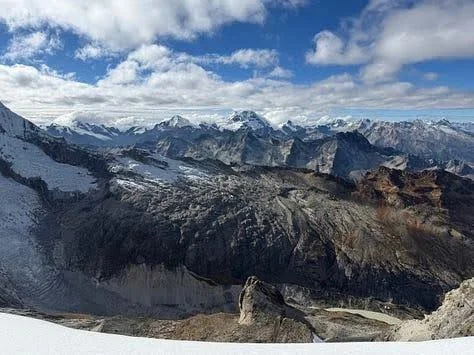
Then, before I knew it, I was looking at the world through a different lens… sat at eye level with neighboring peaks on this strange world of snow caps, cornices and endless horizons (on a normal day I’m just 5’2!)… Just a handful of us enjoying the company of these ancient giants at 18,655 feet. A quick song, dance, and the best snacks saved to share for this moment.
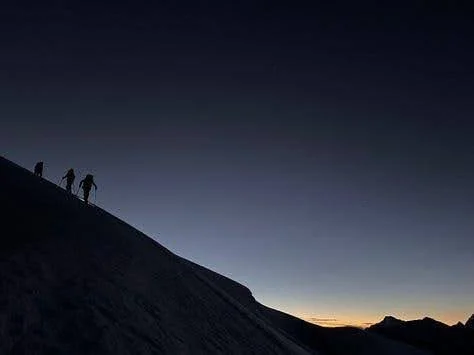
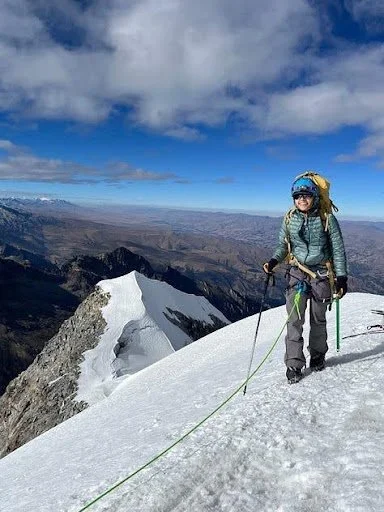
Photos from summit day of Vallunaraju
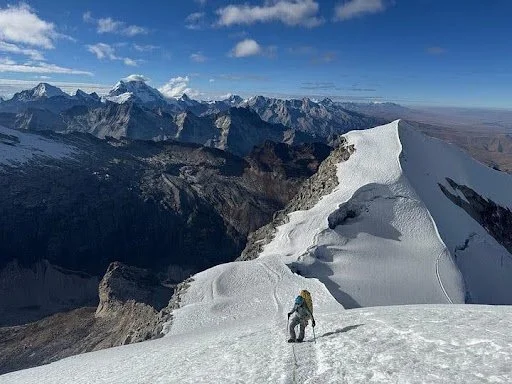
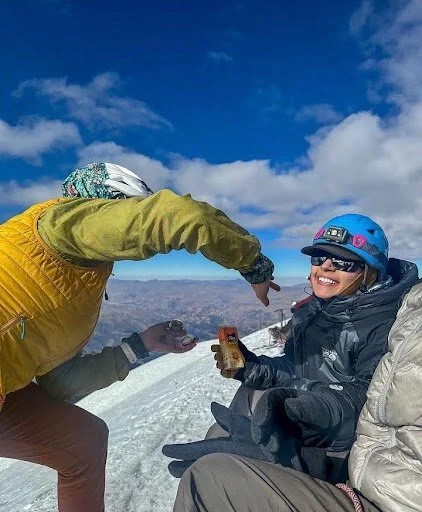
That’s only half the story of course. We had the climb down to go. Here, one of our guides, Alfi, shared an analogy to life and mountaineering. You ascend, you struggle, you lose your breath, you slip, you wonder why the hell you are even here. You celebrate briefly! Then, you do the same thing on the way back down. You slip, you fall, you pick yourself back up, you wonder why the hell you’re even here…
You don’t realize how steep the climb is until you come back down. The daylight offers that new perspective, including revealing what was in the abyss! I’m grateful for the anonymity the night offered. On the way down you’re also faced with several forks, oftentimes two seemingly equally precarious paths. You won’t really know what will happen until you take your next step, and if you fall, you get up. Sometimes you’ve just got to shrug and choose! Sometimes you don’t have a choice and you make the best of it. Lessons embodied.
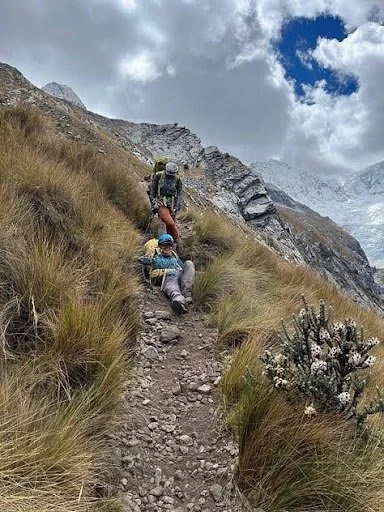
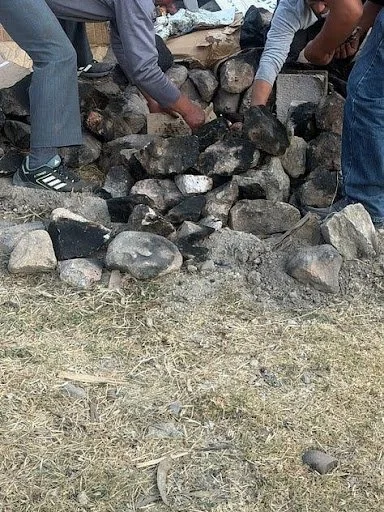
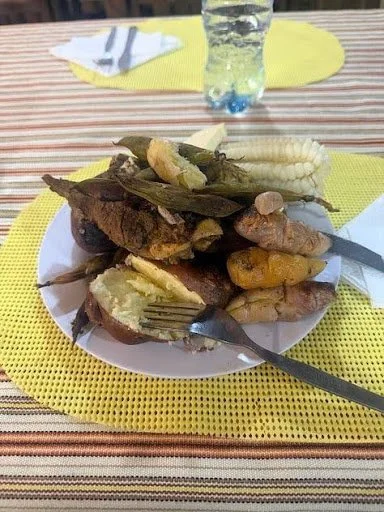
Pachamanca, July 2026
We celebrated the success of a safe return with hot showers, rest, and a traditional Pachamanca.
Reflections from my time in the Cordillera Blanca…
You could say that this journey was everything I dreamed of and trained for.. it also stirred a complex cocktail of feelings; wonder mixed with climate despair, gratitude with grief.
This experience offered so much to me. It offered camaraderie, kinship, and friends that will last far beyond this journey. The mountains pushed me to new limits and I was delighted in discovering that I could rise past them every single time. I rediscovered a resilience I’d forgotten I had. I felt liberated, connected to the land, empowered. Reciprocity, asks what I’m willing to give in return?
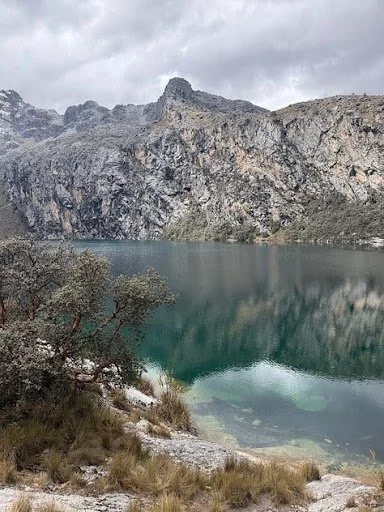
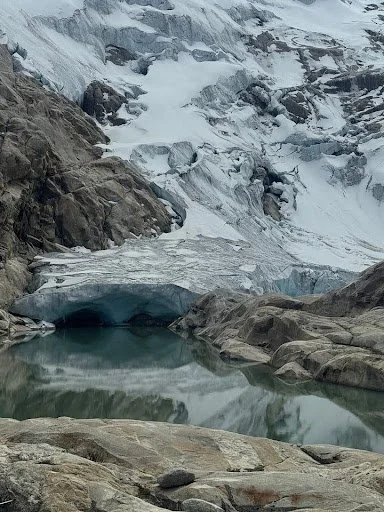
More than once I was moved to tears by the glaciers giving life to their own unique ecosystems and nourishing those far beyond them, their minerals coloring the valleys with wildflowers. They do the quiet work of keeping our planet cool by reflecting solar radiation back into space, all with such grace and grandeur as they cast shimmering mirages over their glacial lakes… magical images that our children and grandchildren will have to piece together secondhand from old photos and stories.
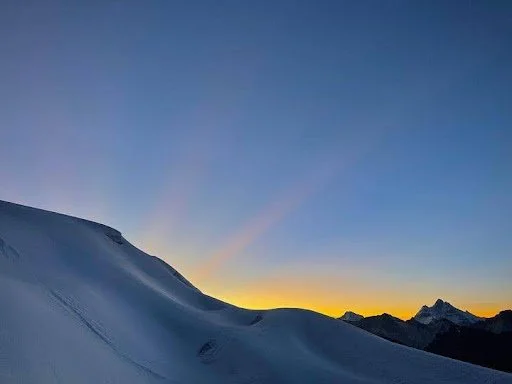
I feel so lucky to have gotten this chance to move so freely across them while they’re still around. Breathing in the crisp air, watching as the first light peaked over the ridge, illuminating a glimmering snow, conversing with the mountains of the Cordillera Blanca just as I had hoped to.
The glaciers have receded significantly even in just the past few years, and the dangers are becoming increasingly evident in our warming climate and the changing avalanche patterns that continue to take the lives of climbers in Ancash and beyond.
Our AWE guides encouraged us to express our full range of emotions. No tear was invalid, no skip too frivolous. It was through this cultivated and intimate environment that gave way to vulnerable and expansive conversations. From personal challenges to collective dreams; we shared our visions for the kind of world we’d like to experience for ourselves and for future generations.
It’s rare and deeply meaningful to experience an all-women climbing community such as this one. An experience made possible through immense access, privilege, and a pinch of good luck granted to us by the Pachamama.
Every step was held by the labor and care of porters, cooks, guides, and by the Indigenous Andean communities whose relationships with these mountains stretch back long before our arrival and long before our dreams of standing among them.
Our expedition was a success, and that success happened amid the climate crisis, on-going gender suppression, intentional violence and land theft. On the day of our return, July 23rd, I learned was also the day that the World Climbing Federation had cancelled their scheduled vote to suspend Israel from competition climbing.
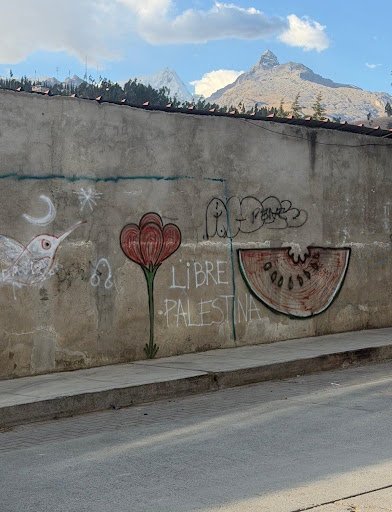
While we were moving freely through the Cordillera Blanca, Palestinian climbers face extreme barriers to accessing their land and participating in their climbing community, including physical assault by settlers and military check points to climb crags they set, not to mention the continued imprisonment of climber and filmmaker Abdallah Motan.
‘Libre Palestina’ on the walls in Huaraz, Ancash, 2026.
Climbing in the Cordillera Blanca was one of the most liberating expressions of freedom I have ever experienced. Moving through the mountains and connecting with the landscape reminded me of how powerful and healing the freedom of movement can be and that something many of us experience as fundamental to climbing, is not equally available across our community.
This reality asks us, as climbers, to look beyond our own experiences of liberation and consider what responsibilities come with this privilege? Both for the ecosystems and communities. We all deserve the opportunity to connect with the land, converse with the mountains, find a rhythm, and if conditions allow, maybe even have a little dance on the summit.
The Summit Scholarship Foundations plays an important role in removing the barriers that exist for more women and gender expansive climbers to experience and enjoy the outdoors, gain knowledge, skills, and confidence.
I look forward to bringing my reflections and learnings into a low-barrier hiking series for queer women in my local community. Continuing to push the boundaries around what we are climbing for, both on and off the mountain. Ladies and theys, stay tuned, and prepare to touch grass!
To learn more about what advocacy for Palestinian climbers looks like follow @climbersforpalestine on socials.
To learn more about how The Summit Scholarship Foundation promotes gender equity in the mountains check out https://www.summitscholarship.org/ and follow @summitscholarship foundation on socials.
To learn more about how to support Andes Mountain Preservation check out https://mountain.pe/
Finally,
A special thank you to Yudith, Shea, and Emma for your endless wisdom, support, and inspiration. I feel so lucky to have climbed with each of you! Thank you also to AWExpeditions and The Summit Scholarship for creating access and opportunity, without which I could not have enjoyed this once in a lifetime experience!